
MAGDEBURG RIGHTS
Magdeburg Rights are one of the oldest systems of municipal self-government, typically granted to settlements by a ruler. As a system of municipal self-government, it began to take shape as early as the 10th century and became most firmly established in the 12th–13th centuries in Magdeburg, Germany. The law takes its name from this city; it is sometimes also referred to as German municipal law. In Lithuania, Vilnius was the first to receive Magdeburg rights in 1387—a development linked to the Christianization of Lithuania and the accelerated growth of municipal self-government.
Although some settlements may have resembled cities in terms of their size or the activities carried out there even earlier (archaeological data indicate that a larger settlement existed in the Vilnius area as early as the 13th–14th centuries, and Kernavė was one of the most important political and economic centers of the state at that time), the granting of Magdeburg rights signified the official recognition of the settlement’s status as a city with self-government. However, Magdeburg rights were not the only privilege that granted a settlement the rights of self-government.
Upon being granted Magdeburg rights, the city’s inhabitants gained partial self-government. These rights included more autonomous city governance through the magistrate, city courts and their proceedings, the establishment of rules for trade and crafts, inheritance of property, transfer of ownership, financial transactions such as loans, the drafting of wills, and other matters of city life.
Magdeburg rights were granted to Jurbarkas on November 4, 1611, at the request of its residents. They were granted by Sigismund III Vasa, the then ruler of the Polish-Lithuanian Commonwealth. Along with the privileges, the ruler required the townspeople to elect a mayor (burmistrz) from among six chosen councilors, as well as to select six aldermen—local court officials—to conduct judicial proceedings. The privilege regulated trade rights and provided guidelines for the construction of buildings important to the town. The town was also granted a coat of arms—three white lilies on a red field. That same month, the ruler appointed Rapolas Jendrejevskis (Polish: Jędrzejewski, Lithuanian: Andrijauskas) as the town’s mayor.
Today, most of what is known about the granting of Magdeburg rights to Jurbarkas and the contents of the charter comes from the Lithuanian Metrica, as the fate of the original royal charter is unknown. Typically, city charters and books related to self-government were kept in the town hall. However, the will of Steponas Dziurdzičius, the town clerk (i.e., the chief councilor), drawn up in 1695, states that the Jurbarkas town charter was kept with the parish priest. For now, the most likely explanation is that the majority of the original town documents were destroyed in fires, perhaps one of the fires that occurred in the second half of the 18th century. This is indirectly confirmed by the fact that in 1791, the townspeople obtained copies of the town’s legal documents from the state chancellery.
For a long time, the Magdeburg Rights were one of the most important documents providing the basis for municipal self-government. However, following the Union of Lublin and as the nobility grew in power, new municipal privileges were granted less frequently, and some settlements lost these rights. This was also influenced by the wars that took place in the territory of the Grand Duchy of Lithuania in the mid-17th century, during which many settlements suffered greatly from the actions of the armies of the Muscovite state and Sweden. Jurbarkas was no exception.
This right was reinstated nationwide at the very end of the 18th century (around 1791–1792), but with the onset of the Tsarist occupation, this Rights was gradually abolished.
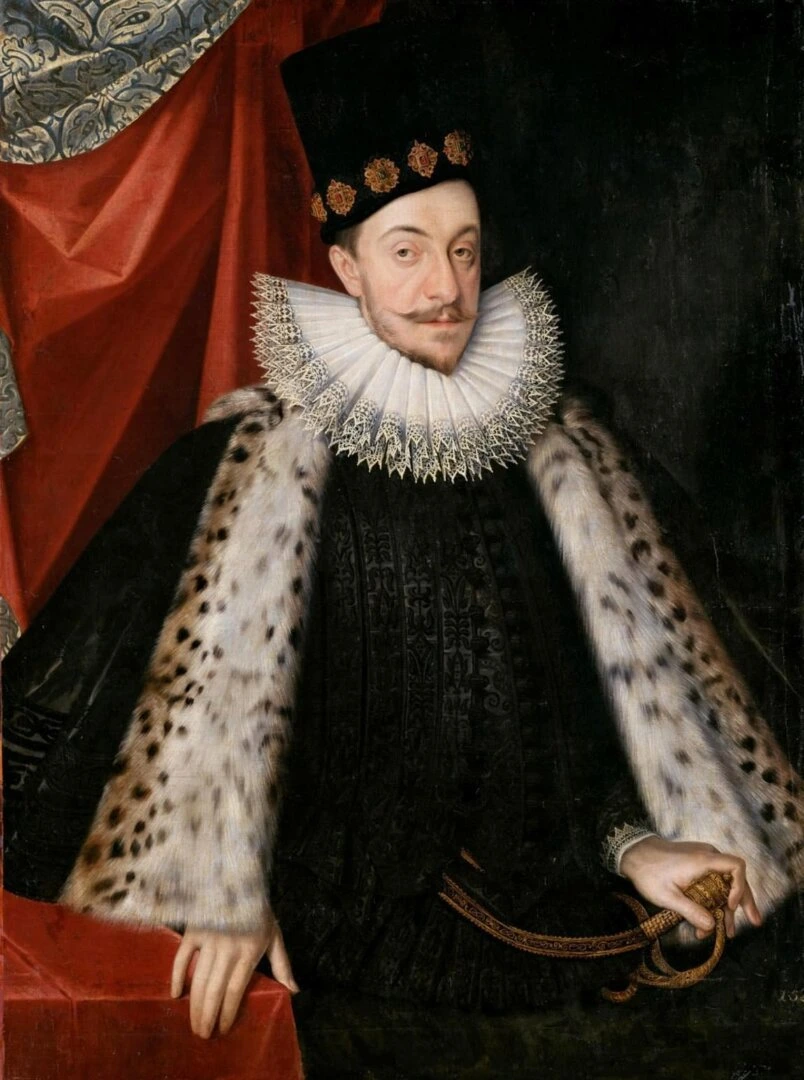
King Sigismund III Vasa. Oil painting, ca. 1590, from M. Kober. Museum of Art History, Vienna


