

JURBARKAS MANOR AND TOWN DURING THE REIGN OF BONA SFORZA AND SIGISMUND II AUGUST
In the first half of the 16th century, after the wars with Moscow had subsided, Sigismund I the Old and Bona Sforza began to strengthen the ruler’s domain and the position of the Jagiellonian dynasty—they redeemed mortgaged manors, organized their accounting, and increased the ruler’s control. During these reforms, the rights of local officials were curtailed, central authority was strengthened, and the functions of the ruler and the local administration were more clearly defined in Samogitia.
Jurbarkas also played an important role in this context. In 1530, Jurbarkas was returned to the ruler’s hands and became a royal district. That same year, Sigismund I the Old transferred it to Bona Sforza, granting her the right to manage the estate independently and appoint officials. At that time, the district’s boundaries were established and a forest survey was conducted, revealing Jurbarkas’ strategic importance as a border territory.
During that period, the Jurbarkas estate was a significant administrative and economic center on the banks of the Nemunas river. It belonged to the ruler, and its management was entrusted to local administrators, who collected taxes, oversaw the estate’s operations, and resolved legal disputes. In 1529, the estate’s administrative regulations governed its revenues and limited the powers of officials—an increasingly larger portion of the income from the land was directed to the ruler’s treasury.
The manor grounds included residential and farm buildings—houses, stables, barns, a kitchen, and other structures. Adjacent to these were cultivated fields, orchards, and vegetable gardens, which supplied the manor with food and ensured its economic activity.
Bona Sforza actively contributed to the economic and urban growth of Jurbarkas. In order to stimulate trade between Lithuania and Prussia, a customs office was established in Jurbarkas on July 16, 1540, by order of Sigismund I the Old and at the behest of Queen Bona. This decision was intended to control trade and increase state treasury revenues. Merchants were instructed to route part of their trade routes through Jurbarkas—one route via Gargždai to Klaipėda (Memel), and another via Jurbarkas to Prussia.
By the queen’s decree, merchants were required to travel through Jurbarkas, maintain salt warehouses there, sell their goods, and spend at least a few days in the town. This stimulated trade, crafts, and the economic life of the townspeople, making Jurbarkas an important trading hub on the Nemunas route.
Bona also took an active interest in the town’s development. The governor, Jonas Kuncevičius, was tasked with selecting a site for the town, surveying plots of land, and granting residents permission to build houses. Thus began the systematic development of the town—streets, a market square, and plots for townspeople were established.
Thanks to the queen’s efforts, a church was built in Jurbarkas in 1545, and the estates of the village of Valininkai were allocated for its upkeep. Later, land from the village of Strazdai was also allocated to support the church and school, strengthening the town’s religious and cultural life.
In 1556, after Bona Sforza left for Italy, Jurbarkas passed to Sigismund II Augustus and became a royal manor—its revenues were allocated for the maintenance of the ruler and his family.
Today, Bona Sforza is considered one of the most influential women in Lithuanian history. Her actions not only strengthened the state but also shaped the development of individual regions, such as Jurbarkas. The reforms, economic decisions, and cultural innovations implemented by the ruler left a lasting mark on the history of all of Lithuania.
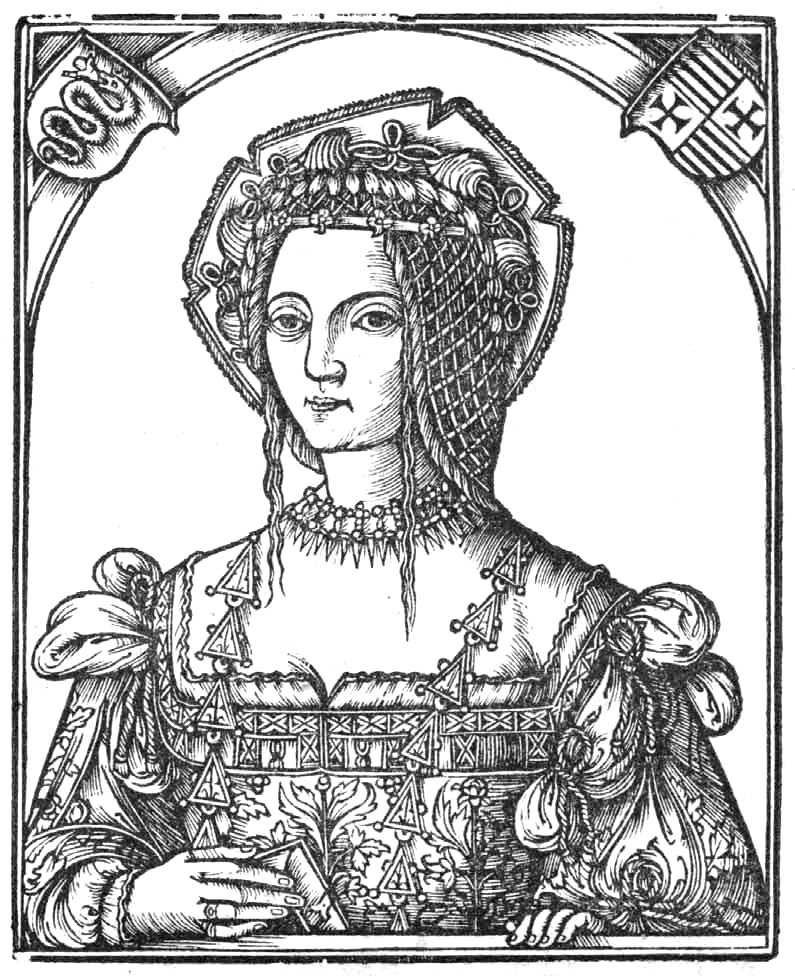
Miniature portrait of Bona Sforza. Lucas Cranach the Young, c. 1553. National Museum in Kraków


